

The Teacher Behind the Owl
Thea Holtan (1932–2020) was a Minnesota educator who believed every child could learn to think clearly and write well, if someone just showed them how.
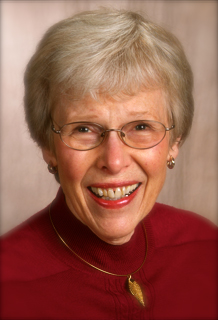
A teacher who saw the gap
Thea Holtan spent decades in Minnesota public schools: first as a high-school English teacher, then as an elementary media director in Bloomington. She worked with thousands of students across grade levels, and she kept noticing the same thing: kids couldn’t write research papers. Not because they weren’t smart, but because nobody had shown them the steps.
The problem wasn’t talent. It was process. Teachers assigned reports and hoped for the best. Students stared at blank pages, overwhelmed by the leap from “pick a topic” to “turn in a paper.” Thea believed there had to be a better way.
Drawing on the work of Dr. Hilda Taba, a Stanford researcher whose inductive teaching strategies showed how children build understanding from concrete facts to abstract ideas, Thea designed a step-by-step process that broke research writing into manageable stages. Every step had a purpose, every skill built on the one before.
In 1973, she self-published her first guide: The Thinking and Writing Process. It spread from school to school, teacher to teacher, refined over decades by the educators who used it. No marketing department, no publisher. Just a process that worked.
“If you can teach a child to think, you can teach a child to write. The thinking comes first.”
The four-part process she created
Thea’s process breaks research writing into four clear stages. Each stage builds on the last, moving students from curiosity to a finished, published report.
Getting Ready
Students choose a topic, narrow their focus, and prepare guiding questions before they start researching.
Gathering Information
Students read sources, take structured note cards, and learn to capture facts in their own words.
Organizing Information
Students sort their notes into topic groups, label those groups, and build an outline that gives their report structure.
Writing Your Report
Students draft from their outline, revise for clarity, edit for correctness, and publish a finished report.
A legacy worth continuing
For over four decades, Thea’s process was passed from teacher to teacher: photocopied guides, handwritten note cards, and word-of-mouth recommendations. It never had a brand or a marketing budget. It spread because it worked. Thousands of students across Minnesota and beyond learned to write their first research papers using her method.
After retiring, Thea continued to mentor teachers and refine her materials. The Parker family, who had seen the process transform their own children’s writing, became close partners in keeping the work alive. Together, they dreamed of making the process available to every classroom, not just the ones lucky enough to know a teacher who had a copy.
Thea passed away in June of 2020 at the age of 88. She didn’t get to see this app, but she would have recognized everything in it: the note cards, the sorting, the step-by-step scaffolding she spent a lifetime perfecting. Write with Thea is the digital continuation of her life’s work.


The owl who carries her name, guiding a new generation of writers, one step at a time.
Built by Teachers, for Teachers
This process was built through the iterative work of teachers. Any and all feedback is welcome, whether you’re using Write with Thea in your classroom or have ideas for improvement.
feedback@writewiththea.orgYou can also explore the original process at thinkingandwriting.org
Continue the Legacy in Your Classroom
Write with Thea is free and always will be.